Sponsored article
The Color and Pompon of a Biretta in the Liturgy: How to Understand Their Meaning
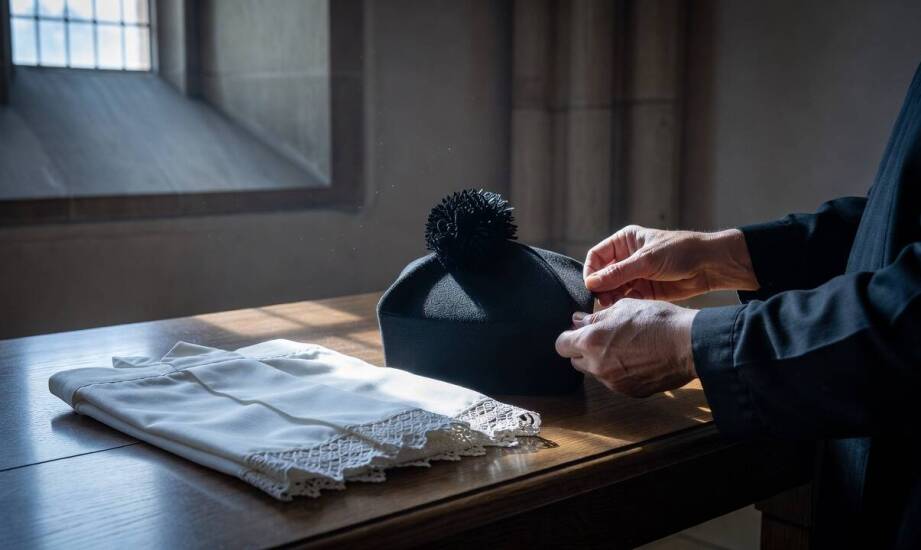
The biretta is a discreet yet recognizable element of Catholic clerical attire. The color of this distinctive head covering, the presence and appearance of its small pompon, and the manner in which it is worn all serve as symbols of rank, office, and attachment to tradition. Understanding these signs helps explain the structure of the Church hierarchy and the significance of vestments that have remained part of the liturgy for centuries.
Read more: The impact of the liturgical season on the choice of chasuble colors
Clerical attire functions as a unique visual language in which each detail has a specific historical and symbolic purpose. Viewed in this broader context, traditional garments are far more than decorative accessories. They form part of the visual heritage of the Western Church and contribute to the dignity and order of solemn liturgical celebrations.
Historical Origins of Colors and the Evolution of the Design
The roots of the biretta can be traced back to the Middle Ages and to head coverings worn by clergy and academic communities throughout Western Europe. Initially, it served a practical purpose by providing protection from the cold in large, often unheated churches during lengthy choir offices.
Over time, the soft cap evolved into a much more structured form. It typically featured three or four vertical projections, commonly referred to as "horns" or ridges.
The assignment of specific colors to particular ecclesiastical ranks developed gradually over many decades. Historical records confirm that the red biretta became associated with cardinals in 1464, when Pope Paul II formally established the custom. The color symbolized readiness for the ultimate sacrifice in defense of the faith. Purple became associated with bishops, while black was traditionally designated for priests and other clergy.
Another noteworthy feature is the ornament positioned on top. The traditional pompon is now largely decorative, although historically it may also have helped users handle or adjust the biretta. In many contemporary cardinalities models, the classic pompon has been replaced by a silk tassel or loop.
Local Tradition and Modern Liturgical Practice
The extent to which this head covering remains part of regular choir dress depends largely on local customs and diocesan regulations. Historically, regional variations in design sometimes reflected local traditions and ecclesiastical culture.
In some areas, clergy still wear the full traditional choir dress during solemn liturgical celebrations. Elsewhere, its use has been preserved mainly for major feasts and particularly formal occasions within the liturgical year.
Modern practice generally follows clearer guidelines than in previous centuries, simplifying what was once a highly complex set of customs. Today, the biretta is often used during entrance and exit processions and while seated in the sanctuary during psalmody or scriptural readings. Clergy typically put it on in the sacristy and remove it before venerating the altar.
Communities attached to the Extraordinary Form of the Roman Rite continue to use it more frequently, and some traditional religious orders retain it as part of their customary public habit.
Material Selection and Traditional Craftsmanship
Traditional liturgical tailoring relies on carefully selected materials that provide durability, comfort, and an appropriate appearance. High-quality wool and natural silk have long been among the most common choices.
Wool versions are widely used throughout much of the liturgical year because they perform well under regular use. Silk models have historically been more common among higher-ranking prelates and during especially solemn celebrations.
An important aspect of the biretta's appearance lies within its hidden internal structure. A properly reinforced construction helps maintain the characteristic shape of the ridges and reduces the risk of deformation caused by repeated handling.
Traditional workshops, including Ars Sacra, pay close attention to internal reinforcement and assembly techniques that reflect established tailoring standards. Careful craftsmanship contributes to maintaining a neat appearance and preserving the symmetry of decorative elements such as the pompon.
To preserve the symbolic clarity of the garment over time, appropriate care is essential. Fine fabrics should be protected from prolonged exposure to direct sunlight, which can cause colors to fade. The head covering is best stored flat in a protective box to avoid deformation. For routine maintenance, a soft natural-bristle brush is generally recommended.
Understanding the Biretta Within the Context of Clerical Dress
Accurately identifying a cleric’s rank, role, or affiliation requires considering the entire ensemble rather than a single garment. The meaning of the head covering emerges from the combination of color, construction details, and the context in which it is used.
Individual elements do not function as isolated decorations. Red, purple, and black provide only part of the message and gain their full significance when viewed alongside the rest of the clerical attire.
Liturgical practice demonstrates that preserving these historical details is about more than attachment to traditional aesthetics. Wherever continuity of tradition is valued, the biretta continues to fulfill an important role. It helps structure ceremonial settings, visually communicates ecclesiastical responsibilities, and completes the formal appearance of clerical dress.
A thoughtful understanding of vestment symbolism ensures that the rich heritage of the Church remains recognizable to future generations.
The biretta combines color, pompon, and manner of use into a recognizable symbol of clerical rank and office.
Historically, it developed from a practical head covering into an established element of choir dress.
The pompon is not a separate symbol of status but a detail that complements the overall design of the head covering.
Local customs and diocesan regulations largely determine how frequently the biretta is used in liturgical settings.
Material quality, reinforcement, and finishing influence both shape retention and visual appearance.
Proper storage and protection from sunlight help preserve the color and symbolic clarity of the garment.
FAQ
Does the color of a biretta always indicate the same ecclesiastical rank?
Not necessarily. While certain colors are strongly associated with specific ranks in the Church, local customs and liturgical traditions may influence how these conventions are applied. The color should therefore be interpreted within the broader context of the complete clerical attire.
Does the pompon have its own symbolic meaning?
Generally, no. The pompon primarily serves as a decorative feature of the biretta. Historically, it may also have assisted in handling the head covering, but its significance is normally understood together with the color, shape, and liturgical context.
How should a biretta be cared for to preserve its shape and color?
The best approach is to store it flat in a dry area away from strong light sources. This helps reduce fading and prevents damage to the reinforced structure. Routine care is typically limited to gentle cleaning with a soft natural-bristle brush.
You might be interested

What are pork inner cheeks used for in gastronomy?

How to Match Sheet Metal Surface Finishing to the Material and Required Finish

What are White Label Supplements?